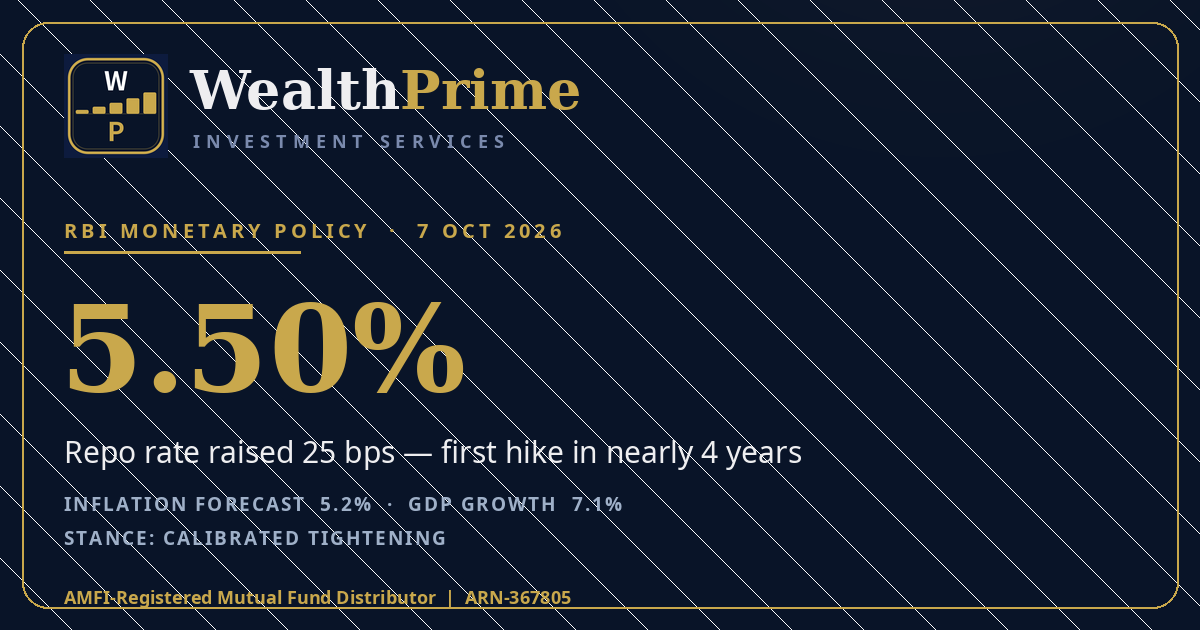
On 7 October 2026, the Reserve Bank of India did something it hadn't done in nearly four years: it raised interest rates. The repo rate went up 25 basis points to 5.50%, and the RBI's stance shifted to "calibrated tightening" — central-bank speak for rate cuts are off the table.
If you have a home loan, an FD, a debt fund, or an SIP (so… everyone), this decision touches your money. Here's what it actually means, without the jargon.
What exactly happened?
The six-member Monetary Policy Committee voted unanimously to raise the repo rate from 5.25% to 5.50% — the first hike since February 2023. By a 4–2 vote, it also changed its stance from "neutral" to "calibrated tightening," signalling that future moves, if any, will be hikes or holds — not cuts.
Why now? Inflation. CPI touched 4.8% in August, the RBI raised its FY27 inflation forecast to 5.2%, and the Governor flagged food, fuel, and global pressures. With GDP growing at a strong 7.1%, the RBI decided the economy could handle the medicine.
What it means for your FD
Good news first: FD rates may rise. When the repo rate goes up, banks typically raise deposit rates over the following weeks — though each bank decides its own timing. If you've been waiting to book an FD, waiting a few weeks could earn you a slightly better rate.
But keep perspective. Even if FD rates climb from ~6.5% toward 7%, the post-tax, post-inflation math we covered in our SIP vs FD guide barely changes: for a 30%-bracket investor with 5% inflation, a 7% FD still delivers roughly zero real return. A rate hike makes FDs less bad — it doesn't make them wealth creators.
Use FDs for what they're for — emergency funds and near-term goals. Don't let a 0.25% rate sweetener tempt long-term money away from growth assets.
What it means for your debt mutual funds
This is the corner most investors misunderstand. When interest rates rise, existing bond prices fall — so debt funds with long-duration bonds can see their NAVs dip in the short term.
The flip side: the fund now reinvests maturing bonds at higher yields, so returns improve over time. What should you do?
- New debt-fund investors: this is actually decent timing — you're locking in higher yields.
- Existing investors: don't panic over a small NAV dip; check your fund's duration. Short-duration and liquid funds barely flinch at a 25 bps move.
- Avoid long-duration debt funds unless you understand interest-rate risk and have a matching horizon.
What it means for your equity SIPs
Almost nothing — and that's the point. Rate hikes can cause short-term market wobbles (higher borrowing costs, FPI outflows), and September's correction showed exactly that. But your SIP benefits from wobbles: fixed monthly investments buy more units when prices dip.
The worst response to a rate hike is pausing your SIP "until things settle." September's AMFI data showed record ₹32,490 crore in SIP inflows during a correction — the investors who stayed the course are precisely the ones compounding rewards.
RBI hikes are weather; your SIP is climate. Don't rewire a 20-year plan around a 25-basis-point headline.
What it means for your loans
This one bites immediately. Repo-linked home loan rates have already moved — Punjab National Bank, Bank of India, Indian Overseas Bank and Indian Bank raised their repo-linked lending rates from 8 October. On a 20-year loan, every 25 bps adds roughly ₹16 per lakh to your monthly EMI.
- Existing borrowers: check whether your lender raised your rate or extended your tenure — and consider a part-prepayment if the math works.
- New borrowers: factor the higher EMI into your budget; with "calibrated tightening," a second hike in December is possible.
Your 4-move action plan
- FDs: wait a few weeks before booking long FDs — better rates may be coming. Ladder your deposits instead of locking everything at once.
- Debt funds: prefer short-duration categories; avoid fresh long-duration bets unless you know what you're doing.
- Equity SIPs: change nothing. Volatility is the entry fee for long-term returns.
- Loans: review your home-loan rate this month; a small prepayment now beats a bigger EMI later.
Sources: Reserve Bank of India MPC statement, 7 Oct 2026; Hindu BusinessLine MPC highlights (PTI). Figures as announced; bank-level rate changes vary.
Confused About What the Hike Means for You?
A 15-minute, no-pressure consultation can sort your FDs, SIPs, and loans into a plan that works in any rate environment.
Prefer chat? WhatsApp us